
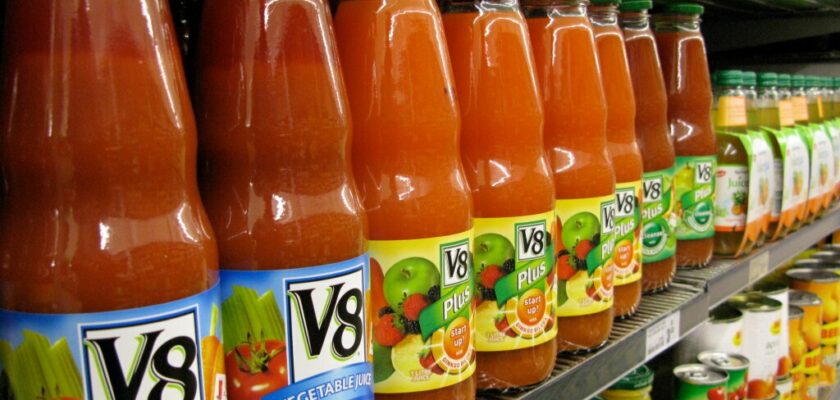
Some people love V8 Juice but is it really that health?
In the quest for better health, many individuals turn to juices as a convenient way to pack in essential nutrients and vitamins. V8 Juice, marketed as a wholesome option due to its vegetable content, often finds its way into grocery carts of health-conscious consumers. But the question remains: is V8 Juice truly a healthy choice?
Understanding V8 Juice:
V8 Juice is a popular brand of vegetable juice owned by Campbell Soup Company. Marketed as a convenient way to consume multiple servings of vegetables in one drink, it typically contains a blend of vegetable juices, including tomatoes, carrots, celery, beets, parsley, lettuce, watercress, and spinach. Some variations may also include fruit juices for added flavor.
The Nutritional Profile:
One of the primary reasons V8 Juice is often perceived as healthy is its nutrient content. It provides a significant dose of essential vitamins and minerals, including vitamins A and C, potassium, and antioxidants like lycopene from tomatoes. These nutrients play vital roles in supporting overall health, such as boosting immunity, promoting healthy skin, and reducing the risk of chronic diseases.
Moreover, V8 Juice is often lower in calories compared to fruit juices, making it a more favorable option for those watching their weight or sugar intake. However, it’s essential to note that some variations of V8 Juice may contain added sugars or sodium, so checking the nutrition label is crucial.
The Benefits:
- Vegetable Intake: For individuals who struggle to meet their daily vegetable intake, V8 Juice can be a convenient solution. It provides a quick and easy way to consume a variety of vegetables in one serving.
- Nutrient Boost: The vitamins and minerals found in V8 Juice can help fill nutritional gaps in the diet, especially for those who may not regularly consume a diverse range of vegetables.
- Hydration: Since V8 Juice is primarily water-based, it can contribute to overall hydration, especially for those who find plain water unappealing.
The Drawbacks:
- High Sodium Content: Some varieties of V8 Juice can be high in sodium, which may not be suitable for individuals with high blood pressure or those watching their sodium intake.
- Potential Sugar Content: While V8 Juice primarily contains vegetables, some variations may include fruit juices, leading to higher sugar content. It’s essential to choose options with no added sugars if you’re concerned about sugar intake.
- Less Fiber: Juicing vegetables removes much of the fiber content found in whole vegetables. Fiber is crucial for digestive health and can help regulate blood sugar levels. While V8 Juice still contains some fiber, it’s typically lower than eating whole vegetables.
Conclusion:
In summary, V8 Juice can be a convenient way to boost your vegetable intake and increase your nutrient consumption. However, like any food or beverage, it’s essential to consume it in moderation and be mindful of added sugars and sodium. Opting for varieties with no added sugars and lower sodium content can make V8 Juice a healthier choice. Ultimately, while V8 Juice can be part of a balanced diet, it should not replace whole vegetables and fruits in your daily eating plan. As with any dietary choice, variety and moderation are key to maintaining overall health and well-being.

