
Your heart beats thousands of times every day, delivering oxygen and nutrients throughout your body.
But medical experts say the number of times your heart beats while you’re resting could reveal important information about your overall health.
Known as your resting heart rate, this simple measurement can provide clues about cardiovascular fitness, stress levels, and certain underlying medical conditions.
For adults over 50, paying attention to this number may be particularly valuable because the risk of heart disease and certain heart rhythm problems increases with age.
The good news is that checking your resting heart rate takes less than a minute, and understanding the results could help you recognize changes worth discussing with your doctor.
What Is a Normal Resting Heart Rate?
According to the American Heart Association, a normal resting heart rate for most adults falls between 60 and 100 beats per minute (BPM).
However, what’s considered healthy can vary depending on your fitness level, medications, medical history, and other factors.
For example, someone who exercises regularly may have a resting heart rate in the 50s, while a person who is less physically active may have a higher reading.
Here is a general breakdown:
- Below 60 BPM: Can be normal for physically active individuals or people taking certain medications, but sometimes requires medical evaluation.
- 60–80 BPM: Falls within the typical adult range and is common among healthy individuals.
- 81–100 BPM: Also within the normal adult range, although consistently higher readings may warrant attention depending on your usual heart rate and overall health.
- Above 100 BPM: A consistently elevated resting heart rate may indicate a condition that deserves medical evaluation.
These numbers are general guidelines, not a diagnosis. A resting heart rate of 85 does not automatically mean someone is unhealthy, just as a resting heart rate of 55 does not guarantee excellent heart health.
Medical professionals emphasize that your individual baseline and changes over time can be more informative than one isolated reading.
A Higher Resting Heart Rate Could Be an Important Warning Sign
One of the most significant findings from cardiovascular research is the connection between elevated resting heart rates and certain long-term health risks.
Studies have found that people with consistently higher resting heart rates may face an increased risk of cardiovascular disease and premature death compared with those who have lower rates.
A higher resting heart rate does not necessarily cause these problems. Instead, it may reflect other factors affecting the body, including poor cardiovascular fitness, chronic stress, illness, or existing medical conditions.
For example, a person whose usual resting heart rate is around 65 BPM but begins regularly recording readings in the 90s may want to investigate the change.
Possible explanations include dehydration, medications, infection, anemia, or thyroid problems.
In some cases, an elevated heart rate may also be associated with an abnormal heart rhythm.
The important takeaway is that a persistent change in your resting heart rate should not be automatically dismissed as a normal part of aging.
A Lower Resting Heart Rate May Indicate Better Cardiovascular Fitness
A lower resting heart rate is often associated with good cardiovascular conditioning.
When the heart becomes stronger through regular physical activity, it can pump more blood with each beat. This means it may not need to beat as frequently while the body is resting.
This helps explain why endurance athletes sometimes have resting heart rates between 40 and 60 BPM.
However, lower is not always better.
A slow heart rate, medically known as bradycardia, can occasionally signal problems involving the heart’s electrical system.
Certain medications, including beta blockers, can also slow the heart rate.
If a low heart rate is accompanied by dizziness, unusual fatigue, fainting, or shortness of breath, medical attention is important.
For older adults, these symptoms should be taken seriously rather than assuming a slow pulse automatically reflects excellent fitness.
Your Resting Heart Rate Could Reveal How Your Body Handles Stress
Heart health isn’t determined by physical fitness alone.
Emotional stress, anxiety, and poor sleep can also influence your resting heart rate.
When someone experiences stress, the body releases hormones such as adrenaline that prepare it to respond to a perceived threat.
These hormones can temporarily increase heart rate.
While occasional increases are normal, ongoing stress may contribute to persistently higher readings in some individuals.
Sleep is another important factor.
Adults who regularly experience inadequate or disrupted sleep may notice changes in their resting heart rate.
Sleep disorders, including sleep apnea, can also affect cardiovascular health and heart rhythm.
For people over 50, addressing sleep problems and managing stress may offer benefits that extend beyond simply improving how they feel during the day.
Why Heart Rate Changes Matter More After Age 50
As people age, the cardiovascular system undergoes natural changes.
The heart and blood vessels may become less flexible, and the likelihood of developing conditions such as coronary artery disease, high blood pressure, and atrial fibrillation increases.
Atrial fibrillation, often called AFib, is an irregular heart rhythm that can increase the risk of stroke.
Some people with AFib experience a racing heartbeat, fluttering in the chest, fatigue, or shortness of breath.
Others have few noticeable symptoms.
Although resting heart rate alone cannot diagnose AFib, noticing an unusually fast or irregular pulse may prompt someone to seek evaluation.
For older adults, monitoring heart rate alongside blood pressure, cholesterol, and other cardiovascular risk factors can help provide a more complete picture of heart health.
Importantly, heart rate and blood pressure measure different things. A normal pulse does not rule out high blood pressure.
Everyday Habits That Can Affect Your Resting Heart Rate
Several common lifestyle factors can influence how quickly your heart beats while resting.
1. Physical activity
Regular aerobic exercise can strengthen the heart and improve cardiovascular efficiency. Walking, swimming, cycling, and other moderate activities can help improve fitness over time.
2. Caffeine consumption
Coffee, energy drinks, and other caffeinated beverages may temporarily increase heart rate in some people, particularly those sensitive to caffeine.
3. Dehydration
When the body lacks sufficient fluids, the heart may beat faster to maintain circulation.
4. Smoking and nicotine
Nicotine stimulates the cardiovascular system and can increase heart rate. Avoiding tobacco is one of the most important steps for protecting heart health.
5. Medications
Some medications slow heart rate, while others can increase it. Prescription medicines, certain inhalers, and some over-the-counter cold remedies may affect pulse readings.
6. Illness and infection
Fever and other illnesses can cause a temporary increase in resting heart rate as the body responds to infection.
Understanding these factors can help explain why your heart rate may fluctuate from one day to another.
How to Check Your Resting Heart Rate at Home
You don’t need expensive medical equipment to check your pulse.
The American Heart Association recommends measuring your resting heart rate when you’re calm, relaxed, and haven’t recently exercised.
For a consistent reading, consider checking it in the morning before getting out of bed, or after sitting quietly for several minutes.
Follow these simple steps:
- Sit comfortably and relax.
- Place your index and middle fingers on the inside of your opposite wrist, just below the base of your thumb.
- Apply gentle pressure until you feel your pulse.
- Count the beats for 60 seconds.
- Record the number and compare it with your usual readings.
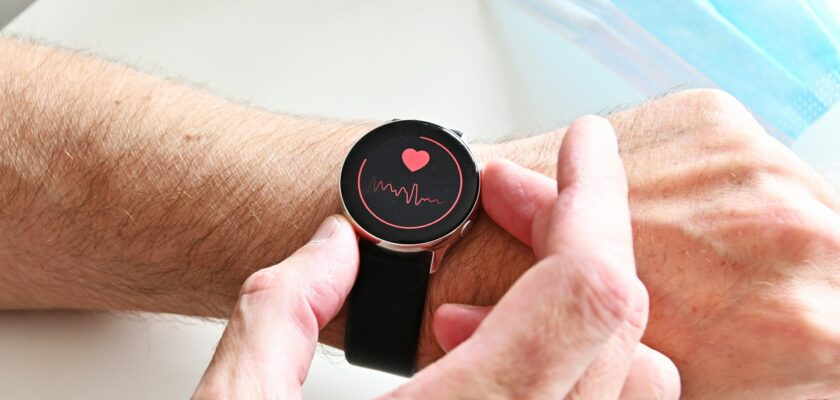
Smartwatches and fitness trackers can also provide useful estimates, although their readings are not always accurate.
If your pulse feels irregular, counting for a full minute and discussing the finding with a healthcare professional may be especially helpful.
Checking your heart rate under similar conditions several times a week can help establish your personal baseline.
Simple Ways to Support a Healthier Resting Heart Rate
For many adults, improving cardiovascular fitness and maintaining healthy habits can help support a healthier resting heart rate.
The American Heart Association recommends at least 150 minutes of moderate-intensity aerobic activity each week for most adults.
That could include brisk walking for 30 minutes on five days of the week.
Other heart-healthy habits include:
- Eating a balanced diet rich in vegetables, fruits, whole grains, and lean protein.
- Getting adequate sleep and addressing persistent sleep problems.
- Maintaining a healthy weight.
- Managing high blood pressure, diabetes, and cholesterol.
- Limiting excessive alcohol consumption.
- Avoiding tobacco products.
- Practicing stress-management techniques such as breathing exercises or meditation.
People with existing cardiovascular conditions should consult their healthcare professionals before making significant changes to their exercise routines.
It is also important not to stop or adjust medications simply to change a heart rate reading.
When Should You Be Concerned About Your Heart Rate?
Not every unusual heart rate reading indicates a serious medical problem.
Temporary changes can happen because of exercise, stress, dehydration, illness, or medication.
However, medical professionals recommend seeking evaluation when resting heart rate readings are consistently outside your usual range, particularly when accompanied by symptoms.
Contact a healthcare professional if you notice a persistently elevated resting heart rate above 100 BPM, an unusually slow pulse, repeated irregular heartbeats, or a significant unexplained change from your normal readings.
Seek emergency medical care if a sudden, unusually fast or slow heart rate occurs with chest pain, severe shortness of breath, fainting, or other serious symptoms.
These symptoms can sometimes indicate a medical emergency.
The Bottom Line
Your resting heart rate is one of the simplest health measurements you can monitor, yet it can reveal valuable information about how your body is functioning.
For most adults, a resting heart rate between 60 and 100 beats per minute is considered normal. However, your individual health circumstances and long-term trends matter just as much as the number itself.
A lower rate may reflect good cardiovascular conditioning, while a persistently elevated or unexpectedly changing heart rate could provide an early clue that something deserves attention.
For Americans over 50, paying attention to these changes can be a useful part of maintaining cardiovascular health.
A few moments spent checking your pulse could help you recognize an important change before it becomes a bigger concern.
And while your resting heart rate cannot tell you everything about your heart, it can serve as a helpful starting point for conversations with your doctor.
Medical disclaimer: This article is provided for general educational purposes and is not intended to replace professional medical advice, diagnosis, or treatment. Always consult a qualified healthcare professional about concerns involving your heart rate or cardiovascular health.

