
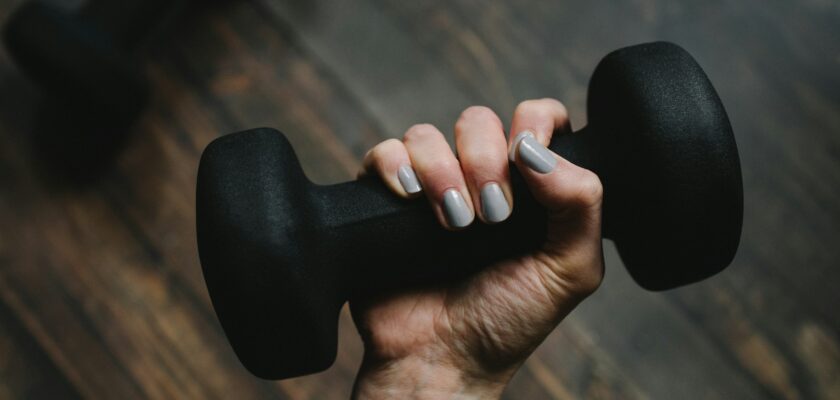
Most people probably don’t give much thought to the strength of their hands.
You notice it when opening a stubborn jar, carrying grocery bags, turning a doorknob, using garden tools, or picking up something heavy. But researchers have discovered that grip strength may provide surprisingly useful information about a person’s overall health and physical condition.
That doesn’t mean a firm handshake guarantees good health — or that difficulty opening a jar means something is seriously wrong.
Instead, grip strength is increasingly viewed as a simple measurement that can offer clues about muscle strength, physical function, healthy aging, and the ability to remain independent later in life.
And as you get older, paying attention to changes in your strength may become increasingly important.
What Exactly Is Grip Strength?
Grip strength is simply a measurement of how much force you can generate when squeezing your hand.
In medical and research settings, it is commonly measured with a device called a hand dynamometer. You squeeze the device as firmly as possible, and it records the amount of force produced.
The test is quick and relatively simple.
But here’s what makes it interesting: Your grip doesn’t depend only on the small muscles in your hands.
A strong grip involves muscles and nerves throughout the hand, wrist, forearm, and upper body. More broadly, grip strength can serve as a convenient indicator of overall muscular function.
That’s one reason researchers have become so interested in it.
Grip Strength May Reflect Overall Muscle Health
Muscle mass and strength naturally tend to decline as people grow older.
The process can happen gradually enough that you don’t immediately notice it.
You might first realize something has changed when carrying groceries feels heavier, climbing stairs becomes more difficult, getting out of a chair requires extra effort, or household chores become tiring.
Grip strength can provide another window into those changes.
Research reviews have found associations between lower grip strength and poorer physical function, disability, and other unfavorable health outcomes.
Importantly, these findings show an association. They don’t mean weak grip strength directly causes disease.
Instead, grip strength may act somewhat like a warning light on a car dashboard: It doesn’t necessarily tell you exactly what’s happening, but a meaningful change may be worth paying attention to.
What Grip Strength May Reveal About Healthy Aging
One of the biggest reasons grip strength matters is that muscle strength affects your ability to remain independent.
Think about how many everyday activities require strength:
- Carrying groceries
- Opening containers
- Lifting laundry baskets
- Getting up from chairs
- Gardening
- Cleaning
- Climbing stairs
- Carrying grandchildren
- Moving objects around the house
Maintaining strength makes these activities easier.
Losing significant muscle strength, meanwhile, can make ordinary tasks increasingly challenging.
That’s particularly important after age 50, when maintaining muscle becomes an increasingly important part of healthy aging.
Researchers Have Linked Grip Strength With Longevity
Perhaps the most attention-grabbing research involves the relationship between grip strength and longevity.
Large observational studies have repeatedly found that people with lower grip strength tend to have a higher risk of premature death compared with people who are stronger.
One major meta-analysis involving more than 53,000 participants found that people in the weakest grip-strength group had a significantly higher mortality risk than those in the strongest group.
Other large research reviews have reported similar associations between grip strength and overall mortality.
That doesn’t mean squeezing a hand-strengthening device will automatically make you live longer.
The more likely explanation is that grip strength reflects several underlying characteristics — including muscular fitness, physical activity, nutrition, neurological function, and general health.
In other words, your grip may provide a small snapshot of how well your body is functioning as a whole.
Grip Strength and Heart Health
Researchers have also investigated whether grip strength may provide information about cardiovascular health.
Reviews of observational research have found associations between lower handgrip strength and cardiovascular mortality.
Again, this doesn’t mean weak hands cause heart disease.
Traditional cardiovascular risk factors such as blood pressure, cholesterol levels, smoking, diabetes, body weight, physical activity, family history, and age remain extremely important.
Grip strength may simply provide another piece of information about someone’s overall physical condition.
Your Grip May Also Say Something About Independence
Living longer is important, but maintaining your ability to enjoy those additional years matters just as much.
That’s where muscle strength becomes especially relevant.
Strength helps you perform routine activities without assistance. It can also make physical activity easier and help preserve mobility.
Research involving older adults has associated grip strength with future functional status and mobility.
The Centers for Disease Control and Prevention recommends that adults 65 and older include muscle-strengthening activities at least two days each week, along with aerobic and balance activities.
Maintaining strength isn’t simply about building bigger muscles.
It’s about maintaining the physical capacity to keep doing the things you enjoy.
Why Does Grip Strength Decline With Age?
Some loss of strength is a normal part of getting older, particularly when people become less physically active.
Several factors can contribute to declining strength, including:
Loss of muscle mass
Muscle tissue tends to decrease with age, especially without regular resistance exercise.
Reduced physical activity
The less muscles are challenged, the less reason the body has to maintain them.
Poor nutrition
Muscles need adequate calories, protein, vitamins, and minerals to function and recover properly.
Illness or injury
Periods of inactivity following an illness, surgery, or injury can sometimes lead to noticeable strength losses.
Joint problems
Arthritis and other conditions affecting the hands and wrists can make gripping uncomfortable or difficult.
Nerve problems
Nerves play an essential role in muscle function, meaning certain neurological problems can affect grip strength as well.
That’s why an unexplained or sudden change shouldn’t automatically be blamed on aging.
How Can You Tell If Your Grip Is Getting Weaker?
You don’t necessarily need special equipment to notice changes in everyday strength.
Pay attention if tasks that once seemed easy become noticeably harder.
For example:
You may struggle more frequently with jars or bottles.
Grocery bags may feel unusually heavy.
You might have difficulty holding heavier cookware.
Objects may slip from your hands more often.
Using tools may become tiring.
You may notice that one hand suddenly feels considerably weaker than the other.
None of these automatically indicates a serious medical problem.
However, new, persistent, rapidly worsening, or one-sided weakness deserves medical attention, particularly when accompanied by symptoms such as numbness, tingling, pain, facial weakness, difficulty speaking, dizziness, or problems walking.
Sudden weakness can require urgent medical evaluation.
Can You Improve Your Grip Strength?
For many adults, strength can be improved or maintained through regular resistance exercise.
And you shouldn’t focus exclusively on your hands.
Because grip strength can reflect broader muscular fitness, a well-rounded strengthening program is generally more useful than simply squeezing a grip trainer hundreds of times.
Activities may include:
- Resistance-band exercises
- Light or moderate weight training
- Body-weight exercises
- Carrying appropriately weighted objects
- Gardening and other physically demanding household activities
- Exercises targeting the back, shoulders, arms, and legs
For grip specifically, exercises such as carrying dumbbells, squeezing an appropriate resistance device, wrist exercises, or simply holding weights can challenge the muscles involved in gripping.
The key is gradual progression.
You don’t need to start with extremely heavy weights to benefit.
Don’t Forget About Your Legs
There’s an important point that can get lost when discussing grip strength.
Your entire body needs strengthening — not just your hands.
Strong legs and hips are particularly important as you age because they help with walking, climbing stairs, getting out of chairs, maintaining balance, and performing everyday activities.
A good exercise program should therefore target all the major muscle groups rather than concentrating exclusively on grip.
The CDC recommends muscle-strengthening activities that work the legs, hips, back, abdomen, chest, shoulders, and arms.
Protein and Nutrition Matter, Too
Exercise provides the stimulus your muscles need, but your body also requires adequate nutrition.
Protein is particularly important because it provides amino acids used to maintain and repair muscle tissue.
Common protein sources include eggs, poultry, fish, dairy products, beans, lentils, soy foods, nuts, and seeds.
A balanced diet containing vegetables, fruits, whole grains, healthy fats, and sufficient protein can support overall health as well as an active lifestyle.
People with kidney disease or other medical conditions that affect dietary needs should discuss significant changes in protein intake with a healthcare professional.
Should You Test Your Grip Strength?
A professional grip-strength test can provide a useful baseline, especially for older adults or people undergoing physical therapy.
But the number shouldn’t be interpreted in isolation.
Normal grip strength varies according to factors including age, sex, body size, which hand is dominant, testing technique, and the equipment being used.
That’s why comparing your result with a random number found online may not tell you very much.
A healthcare professional or physical therapist can interpret the measurement in context.
Tracking changes over time may sometimes be more informative than obsessing over a single result.
The Bigger Lesson About Grip Strength
The real lesson isn’t that everyone needs an exceptionally powerful handshake.
It’s that muscle strength matters far more to healthy aging than many people realize.
Your ability to grip, lift, carry, stand, walk, and perform everyday tasks depends on maintaining functioning muscles.
Grip strength happens to provide researchers and healthcare professionals with a convenient way of getting a glimpse into that larger picture.
And while no single measurement can predict your future health, declining strength may be a useful reminder to pay attention to physical activity, nutrition, and your overall health.
The Bottom Line
Your hands may reveal more about your physical condition than you think.
Research has associated lower grip strength with poorer physical function, disability, cardiovascular outcomes, and higher mortality risk. But grip strength is a health indicator — not a diagnosis or crystal ball.
The encouraging news is that muscle strength isn’t entirely determined by age.
Regular resistance exercise, staying physically active, eating a nutritious diet, and addressing medical problems that interfere with movement can all play a role in preserving strength.
So the next time you effortlessly open a stubborn jar or carry several grocery bags into the house, remember:
Those ordinary tasks depend on something worth protecting — your strength and independence.
This article is for general educational purposes and is not a substitute for professional medical advice, diagnosis, or treatment. Talk with a qualified healthcare professional before beginning a new exercise program, particularly if you have a medical condition, significant pain, unexplained weakness, or mobility limitations.

